
Blending Traditions: Building Holiday Rituals as a Couple and a New Family
When two people build a life together, two sets of holiday rituals quietly collide. This article explores why family traditions carry so much weight, how couples and blended families can merge them with care, and how new rituals become the foundation of a family's own culture.
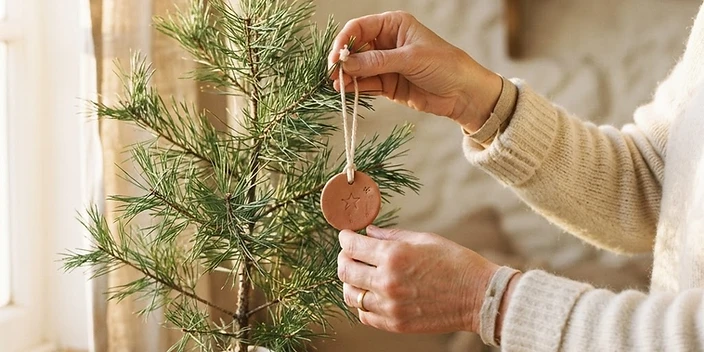
Every family carries rituals — the stuffing recipe, the gift game, the carols on the drive, the order of who opens what first. When two people build a life together, those rituals quietly collide. One partner's "normal" is the other's novelty; one partner's sacred tradition is the other's Tuesday.
Whether you're newly married, blending families after divorce, or simply finding your feet as a household of your own, building shared traditions is one of the most meaningful — and most overlooked — projects a relationship can take on.
Why traditions matter more than they seem
Traditions are not decoration. They are the architecture of belonging. Research on family ritual shows that predictable, shared practices are linked to stronger marriages, better-adjusted children, and a more durable sense of "us." Rituals answer three quiet questions every member of a family asks: Do I belong here? Are we stable? Are we us?
That's also why merging traditions can hurt. The partner who lets go of the Christmas Eve candlelight service, or the tamale-making morning, is not just skipping an event — they're renegotiating their identity. And the stepchild who refuses the new family's ritual is not being difficult; they're protecting loyalty to a world that still exists.
The merger mindset
Couples who blend traditions well tend to share one attitude: nothing is owed a spot, and nothing is forbidden one. Each tradition must earn its place in the new household — including the ones you grew up with. Some practical moves:
-
Inventory first, together. Each partner lists the traditions that mattered most and why. You'll discover the meaning is rarely the ritual itself — it's what it carried (connection, warmth, a grandmother's memory, an escape from chaos).
-
Keep one, from each. Every member of the household — including kids — gets to keep one tradition that matters most. This single move prevents most "you're erasing my family" conflict.
-
Invent one that's yours. The rituals that bind a new family fastest are the ones with no history to defend — the pancake morning, the holiday lights drive with a thermos of cocoa, the movie nobody's allowed to talk during. New traditions have no owners and no baggage.
-
Expect friction on the first pass. The first holiday after a merger is an audition, not a verdict. Traditions that were awkward this year may become beloved by the third; ones that seemed essential may quietly fall away.
For blended families: go slower than feels natural
Blending families — especially around holidays — rewards patience over programming:
- Honor the old world. Kids still love the other household's traditions. Allowing them to carry both — rather than choosing — frees them from loyalty binds.
- Don't compete with the other home. Traditions built to outshine a co-parent's house teach kids that love is a scoreboard.
- Let step-relationships build sideways. Bonds form through low-pressure proximity — cooking together, decorating — not through mandated closeness.
When traditions become the battleground
Sometimes the fight about the recipe or the schedule isn't really about that. It's about whose grief gets honored, whose family holds power, whose way of loving wins. When the same tradition sparks the same fight every year, that's a signal the deeper conversation hasn't happened — and couples or family therapy can be the place to have it.
A closing thought
The goal of merging traditions is not to re-create either childhood. It's to build something a child in your home will one day refuse to give up — because it meant they belonged to something that was unmistakably, tenderly yours.